Before the First Guest Arrives: The European Philosophy of the Considered Invitation
There is a moment, often overlooked in the rush of party planning, that carries more weight than the menu, the flowers, or even the guest list. It arrives weeks before the evening itself, in the form of an invitation — and in much of continental Europe, that moment is treated with the same seriousness as the gathering it announces.
For many American hosts, the invitation has been reduced to a functional communication: a date, a time, an address, perhaps a link to an online RSVP form. Efficient, certainly. But efficiency and elegance are rarely the same thing. The European tradition holds that an invitation is not a notification — it is a promise. It tells your guest, before they have even stepped through your door, exactly how they will be made to feel.
The Message Before the Message
Consider what a guest receives when an envelope arrives by post rather than a notification by text. They must pause. They must open something. They must hold it. In that small, unhurried sequence of actions, the host has already communicated something essential: you are worth the effort.
This is the foundational principle of European invitation culture, particularly as practiced in France, Italy, and the Scandinavian countries, where social rituals tend to be fewer but considerably more deliberate. Rather than extending casual, last-minute invitations to large numbers of acquaintances, hosts curate their gatherings carefully — and signal that curation through the invitation itself.
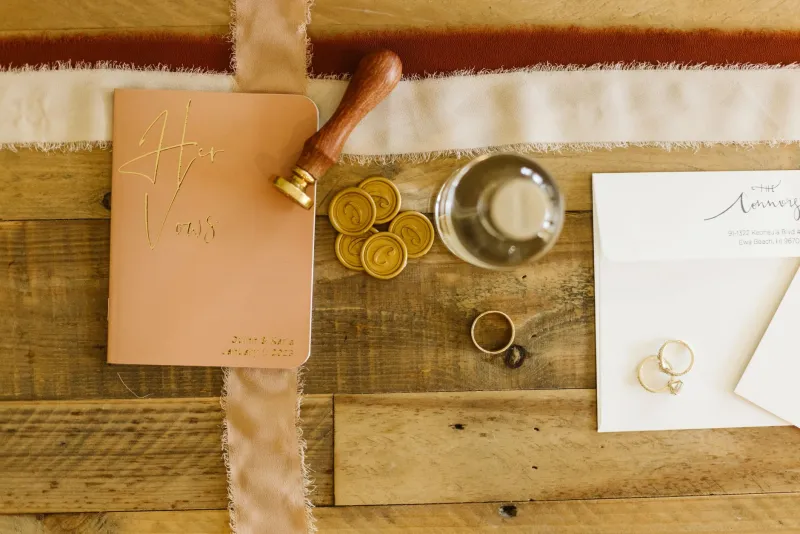
The physical object matters. Paper weight, typeface, ink color, and even envelope lining are considered part of the message. A dinner invitation written on heavy cream stock, addressed by hand, and sealed with a wax stamp communicates refinement before a single word is read. It sets an expectation of quality that the evening itself must then fulfill.
Wording as Hospitality
Beyond the material, the language of the invitation deserves equal attention. European hosts — particularly those in France and the United Kingdom — have long understood that the phrasing of an invitation shapes the emotional register of the entire event.
A formal dinner invitation that reads "We request the pleasure of your company" conveys something entirely different from "You're invited!" Neither is wrong, but each prepares the guest for a distinct experience. The former suggests ceremony, intention, and a certain reciprocal responsibility on the guest's part. The latter suggests informality and ease. The key is alignment: the invitation must accurately reflect the gathering it precedes.
For American hosts seeking to elevate their social events, even modest adjustments to language can make a meaningful difference. Replace generic phrases with specific ones. Instead of "dinner at our place," consider "a dinner in the French tradition, beginning with an aperitif at seven." Specificity signals preparation. It tells your guest that you have thought carefully about the evening — and by extension, about them.
The Art of Personalization
Perhaps the most distinctly European element of invitation culture is personalization — the small, deliberate detail that makes a guest feel singularly considered rather than collectively included.
In practice, this might mean adding a handwritten line at the bottom of an otherwise printed card: a reference to a shared memory, an acknowledgment of something the guest mentioned at your last meeting, or simply a line that reads "I have been looking forward to introducing you to the wine we discovered in Burgundy last autumn." These additions cost nothing beyond a moment of genuine attention, yet they transform an invitation from a piece of stationery into a personal gesture.
Hosts in Italy, in particular, are known for this practice. The invitation is considered the first act of conversation — an opening line in a dialogue that will continue through the evening and perhaps long afterward.
Timing as a Form of Respect
In the United States, it has become increasingly common to extend invitations with very little advance notice. While spontaneity has its charm, European entertaining tradition views adequate notice as a form of respect — an acknowledgment that your guests have full lives and deserve the opportunity to prepare themselves properly for an occasion.
A formal dinner invitation, in the continental tradition, is extended three to four weeks in advance. This is not pedantry — it is consideration. It allows guests to arrange their schedules without inconvenience, to anticipate the event with genuine pleasure, and to arrive not harried and unprepared, but composed and present.
For less formal gatherings, two weeks is generally considered appropriate. The principle is consistent regardless of occasion: the earlier the invitation, the more clearly it signals that the host values the guest's presence and has planned accordingly.
The Digital Invitation, Done Well
It would be impractical — and somewhat dishonest — to suggest that paper invitations are the only acceptable form in contemporary American life. They are not. Digital invitations have become a standard and legitimate mode of communication, and European sensibility is adaptable enough to accommodate them, provided they are executed with the same degree of care.
A well-designed digital invitation can convey elegance through restraint: a clean layout, a considered typeface, a palette that reflects the season or the occasion, and language that is specific rather than generic. What it should avoid is the look of a mass-produced template dashed off in minutes — the digital equivalent of a flyer stapled to a telephone pole.
Several European design studios now offer digital invitation templates that carry the visual vocabulary of traditional stationery into the online format. For American hosts who entertain frequently, investing in a small suite of such templates — one for formal dinners, one for seasonal gatherings, one for more casual occasions — creates a consistent aesthetic identity that guests will come to recognize and anticipate.
Setting the Tone for the Evening
Ultimately, the invitation is not merely a preamble to the event — it is part of the event itself. When a guest arrives at your door having received a thoughtful, beautifully worded, timely invitation, they arrive already inclined toward pleasure. They have been primed for a particular quality of experience, and the host who delivers on that promise will find that their gatherings acquire a reputation that precedes them.
This is the quiet power of the considered invitation: it does not simply inform — it transforms. It converts an ordinary evening into an anticipated occasion, and an ordinary guest into someone who feels, before they have even arrived, genuinely welcomed.
At Lemes & Co., we believe that the objects and rituals surrounding a gathering are as meaningful as the gathering itself. The invitation is where that meaning begins.

