Raise a Glass Before Dinner: The Continental Art of the Aperitivo Hour, Reimagined for the American Home
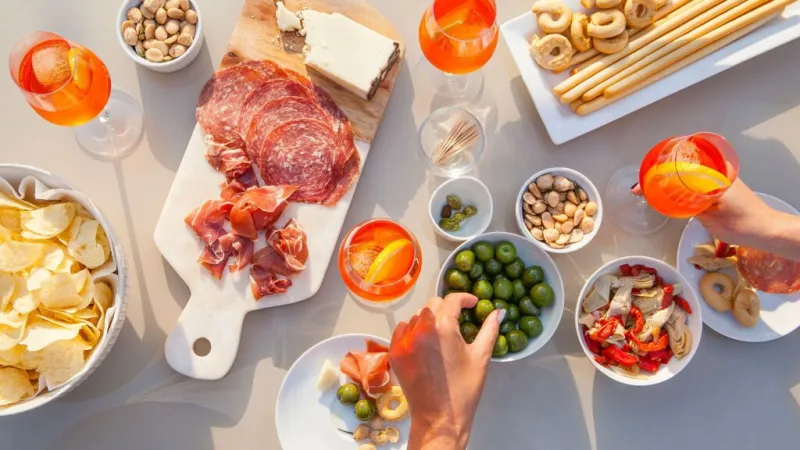
Photo: elegant European aperitivo spread with Aperol spritz olives and charcuterie on marble table, via bus2alps.com
Long before the dinner table is set, Europeans gather for something far more civilized: the aperitivo hour. This storied pre-dinner ritual, refined over centuries across Italy, France, and Spain, is one of the Continent's most exportable pleasures — and with the right guidance, it translates beautifully to the American home.
In an age of rushed weeknight dinners and weekend gatherings that collapse into noise and chaos, the aperitivo offers a considered alternative. It is not merely about drinking. It is about transition — a deliberate pause between the demands of the day and the warmth of the evening ahead.
A Brief History of the Pre-Dinner Pour
The word aperitivo derives from the Latin aperire, meaning "to open." The concept is precisely that: a gentle opening of the appetite, a welcoming of the senses before a meal. The tradition dates to 18th-century Turin, where a pharmacist named Antonio Benedetto Carpano is widely credited with creating the first commercial vermouth — a fortified, botanically infused wine designed to stimulate digestion and conversation in equal measure.
From those northern Italian origins, the custom spread with remarkable ease. In Milan, the aperitivo evolved into an institution, with bars offering complimentary small bites alongside bitter, low-alcohol drinks. In France, the ritual took on a different character: the apéritif became synonymous with Champagne, pastis, and the unhurried cadence of Provençal evenings. Meanwhile, in Spain, the aperitivo blended into the broader culture of tapas — small, convivial plates shared freely among friends before a late supper.
Each regional variation reflects a distinct philosophy, yet all share the same essential quality: intentionality. The aperitivo hour is never accidental.
The Italian Influence: Bitters, Bubbles, and a Little Drama
If you wish to anchor your home aperitivo in the Italian tradition, begin with the classics. Campari, Aperol, and Select are the foundational bitter liqueurs of the northern Italian canon. Mixed with Prosecco and a splash of sparkling water, Aperol produces the now-famous Spritz — a drink that has crossed the Atlantic with considerable success and remains one of the most approachable entry points into aperitivo culture.
For those seeking something with greater complexity, Campari served with vermouth and a single large ice cube — the Americano — offers a more sophisticated proposition. Pair either drink with small plates of cured meats, marinated olives, and thin, crisp crackers topped with fresh ricotta and a drizzle of honey. The goal is not satiation but stimulation.
When sourcing Italian aperitivo staples in the United States, specialty liquor retailers in most major cities carry Campari and Aperol with ease. Prosecco, too, is widely available at accessible price points — look for bottles from the Valdobbiadene or Conegliano appellations for a step above the standard shelf offering.
The French Approach: Restraint and Refinement
The French apéritif is, by nature, a quieter affair. Where the Italian aperitivo embraces bold bitterness and visual flair, the French tradition favors understatement. A chilled glass of dry Champagne or Crémant d'Alsace, a bowl of salted almonds, and perhaps a thin slice of jambon de Bayonne on a small plate — this is the French ideal.
Pastis, the anise-flavored spirit associated with Marseille and the Provençal countryside, deserves particular mention. Diluted with cold water in a ratio of roughly one part pastis to five parts water, it turns a milky, opalescent gold and carries an almost meditative quality. It is not to every American palate, but for those willing to explore, it is among the most transportive drinks in the European repertoire.
For a French-inspired aperitivo spread, consider a small cheese board featuring a young chèvre, a wedge of Comté, and a few cornichons alongside a simple Dijon-dressed radish crudité. The color palette, much like the French aesthetic itself, should feel effortless and composed.
The Spanish Spirit: Abundance and Generosity
Spain approaches the aperitivo with characteristic generosity. The Spanish vermut hour — named for the vermouth that anchors it — is a weekend institution in cities like Barcelona and Madrid. Served on ice with a twist of orange peel and an olive skewered on a toothpick, Spanish vermouth is rounder and more aromatic than its Italian counterpart.
Accompanying the drinks, one might find boquerones (white anchovies in vinegar), patatas bravas, slices of Manchego, and small portions of jamón ibérico. The Spanish aperitivo does not shy away from abundance. It is a celebration of the table before the table has even begun.
In the US, Spanish-style vermouth — brands such as Lustau or Yzaguirre — can be found at well-stocked wine merchants and online retailers. Manchego cheese is now a fixture at most American grocery chains, and high-quality tinned seafood, a Spanish pantry staple, has experienced a remarkable cultural renaissance among American food enthusiasts.
Styling Your Home Bar for the Continental Hour
The physical environment of the aperitivo matters enormously. European hosts understand that the setting is part of the ritual. A cluttered, improvised bar setup undermines the sense of occasion that the aperitivo is meant to create.
Begin with a dedicated surface — a sideboard, a bar cart, or even a well-dressed kitchen counter. Stock it with a small selection of bottles rather than an overwhelming array. Three or four spirits, a quality vermouth, a bottle of sparkling wine, and the appropriate glassware are sufficient. Invest in proper coupe glasses for Champagne-based drinks, short tumbler glasses for spirit-forward pours, and elegant stemmed wine glasses for those who prefer wine.
Fresh citrus — lemon, orange, grapefruit — arranged in a small bowl adds both visual warmth and practical utility. A dedicated ice bucket with tongs, a small cutting board, and a sharp paring knife complete the setup with understated functionality.
The small bites, arranged on wooden boards or ceramic plates rather than plastic trays, should be set out just before guests arrive. European hosts rarely fuss over elaborate canapés; the emphasis is on quality ingredients presented simply.
An Invitation to Slow Down
Perhaps the most meaningful aspect of the aperitivo tradition is what it asks of its participants: nothing more than presence. In the American context, where entertaining often defaults to maximalism — elaborate cocktail menus, multi-course spreads, and the pressure of constant performance — the European aperitivo offers a liberating counterpoint.
It asks you to set out a few beautiful things, pour something cold and lightly bitter, and simply be with the people you have invited into your home. The dinner will come. The evening will unfold. But for one unhurried hour, the aperitivo holds everything gently in place.
At Lemes & Co., we believe that the finest European traditions are not relics to be admired from a distance but practices to be lived. The aperitivo hour is one of the Continent's most generous gifts — and it requires nothing more than a little intention to make it your own.