Ink on Paper, Meaning in Every Line: Reviving the European Tradition of Personal Correspondence
There is a particular kind of pleasure in opening a mailbox to find, tucked between the utility bills and promotional circulars, an envelope addressed in someone's own hand. The ink is slightly imperfect. The stamp is slightly crooked. And the whole small object radiates something that no push notification has ever managed to replicate: the unmistakable sense that another human being sat down, thought of you specifically, and gave you a portion of their irretrievable time.
Across much of Europe — in France, in Italy, in the Nordic countries, in the British Isles — this practice never entirely disappeared. While the rest of the world migrated wholesale to digital messaging, a quiet tradition of personal correspondence endured in drawing rooms, at writing desks, and in the careful selection of stationery that would do justice to the words placed upon it. For Americans accustomed to the instant and the ephemeral, there is much to learn from this continental commitment to the written word.
Why the Letter Survived Where Other Customs Did Not
The persistence of handwritten correspondence in European culture is not mere sentimentality, nor is it a rejection of modernity. It is, at its core, a philosophy about the nature of communication itself. In many European households, the letter is regarded as a fundamentally different medium from a text message or an email — not simply an older version of the same thing, but a distinct form of expression with its own grammar, its own cadence, and its own emotional register.
Where digital communication prizes brevity and speed, the letter rewards patience and depth. It asks the writer to inhabit a thought long enough to commit it to paper with a pen that cannot be easily edited. It asks the reader to slow down, to hold something physical, to experience language as texture as much as meaning. This deliberateness is not inefficiency. It is, in the European view, the very point.
Correspondence as a practice also carries a certain social weight on the Continent. A handwritten thank-you note following a dinner party is not considered old-fashioned in Paris or Florence — it is considered correct. A letter of congratulation sent on fine paper signals that the occasion warranted genuine effort. These are not performative gestures; they are the visible architecture of relationships maintained with care.
The Materials of the Practice
To write well by hand, one must first write on materials worthy of the endeavor. This is where the European approach diverges most visibly from the improvised American tendency to grab whatever notepad is nearest.
Paper matters enormously. Seek out stationery with some weight to it — 90 grams per square meter or heavier — and a surface that holds ink without bleeding. Many European paper houses, some of which have been producing fine stationery for well over a century, offer letter sheets and correspondence cards that feel substantial in the hand. The difference between writing on quality paper and writing on printer stock is not subtle; it changes the entire experience, for writer and recipient alike.
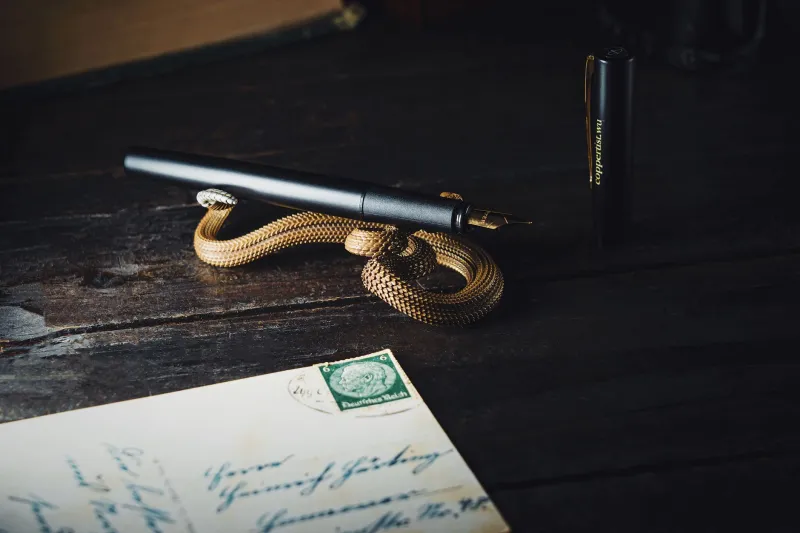
The choice of pen is equally consequential. A good fountain pen, properly maintained, transforms handwriting. The nib glides rather than scratches, and the slight variation in line weight that results from natural hand pressure gives each letter a personality that a ballpoint simply cannot produce. For those new to fountain pens, a modest entry-level model from a reputable European maker is a worthwhile investment — one that, like the best things in the European tradition, is built to last decades rather than months.
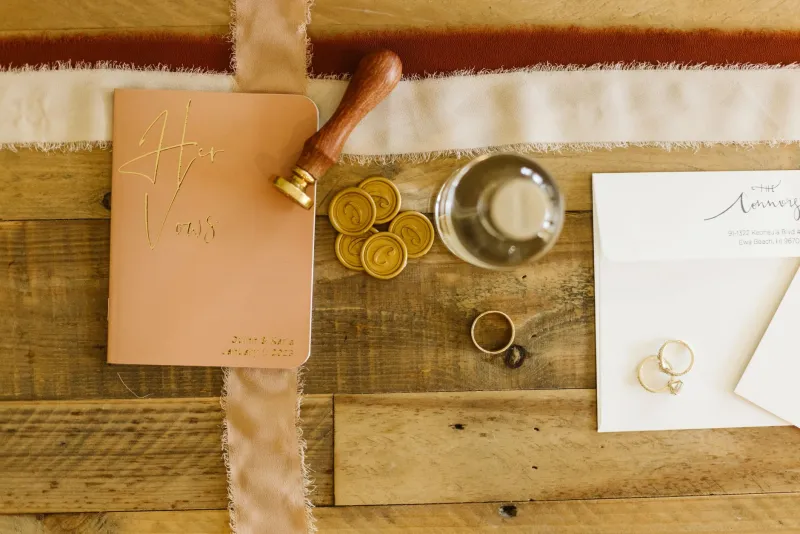
Finally, consider the envelope and the seal. A well-chosen envelope — lined, perhaps, with a subtle pattern — and a proper wax seal or quality adhesive closure communicate that the contents have been prepared with intention. These are small details, but in the world of correspondence, small details are the entire vocabulary.
The Ritual of Writing
European correspondents tend to approach letter-writing as a scheduled practice rather than a spontaneous impulse. Many keep a dedicated writing hour — Sunday mornings are traditional in several countries — during which they attend to their correspondence with the same regularity they might give to any other meaningful weekly ritual.
This habit is worth adopting deliberately. Choose a time of day when you are unhurried and a place that feels conducive to reflection. Clear the surface. Put the phone in another room. Pour something warm. The physical environment shapes the quality of what emerges on the page.
Begin, as Europeans often do, with an acknowledgment of the last communication received — a reference to something the recipient said or shared, which signals that their words were genuinely read and considered. From there, write as you would speak in your most thoughtful moments: with some structure, with genuine observation, with the occasional digression that reveals rather than obscures. A letter need not be long. Two or three paragraphs written with full attention surpass two pages of filler every time.
What the Letter Gives Back
There is a growing body of research suggesting that handwriting engages the brain differently from typing — more slowly, more reflectively, with greater consolidation of thought. But beyond the cognitive dimension, the practice of regular correspondence offers something harder to quantify: a counterweight to the particular exhaustion of digital life.
When every message arrives with equal urgency, when every platform competes for the same fractured attention, the act of writing by hand becomes a form of resistance — not angry resistance, but the quiet, purposeful kind. It insists that some communication deserves more than thirty seconds. It insists that some relationships are worth the inconvenience of a stamp.
And for the recipient, a handwritten letter is one of the few objects in modern life that tends to be kept. People save letters in shoeboxes, in desk drawers, in the pages of books. They are reread years later, after circumstances have changed and the sender may no longer be present. They become, in time, artifacts of a life lived in connection with others — a function that no email archive, however meticulously organized, has ever quite fulfilled.
Beginning Your Own Practice
Start simply. Choose one person — a parent, a close friend who has moved away, a mentor you have lost regular contact with — and write them a letter this week. Not an email, not a card with a pre-printed message, but a genuine letter on proper paper with a pen you have selected for the purpose.
Do not worry about elegance or eloquence on the first attempt. The act itself is the beginning. The refinement comes with repetition, as any European correspondent will tell you. What matters is that you begin — and that in beginning, you join a tradition that has carried human connection across centuries, across borders, and across every technological disruption the modern world has yet devised.