The Quiet Ceremony of Tuesday Dinner: How Europeans Make Every Meal Count
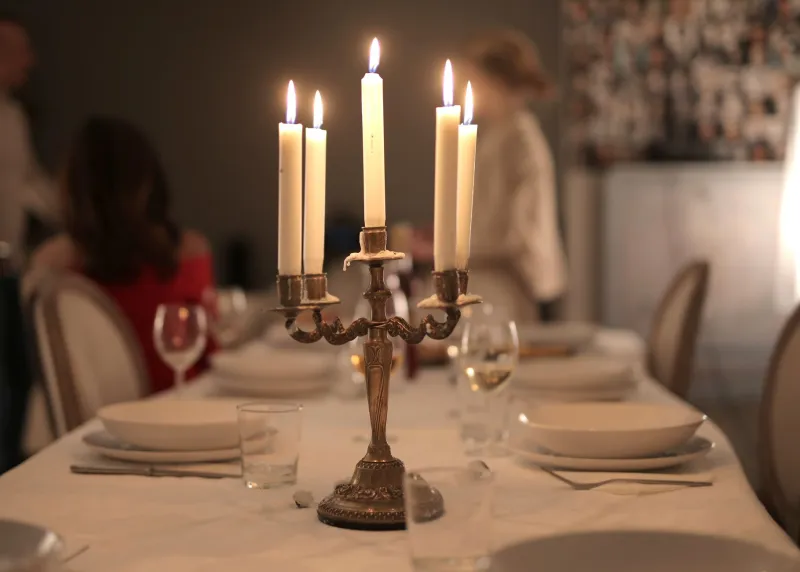
There is a particular kind of contentment that settles over a European household at the dinner hour—not on a holiday, not for a dinner party, but on an unremarkable Wednesday in November. The table is set with intention. A candle or two burns at the center. The meal is simple, perhaps a roasted chicken with herbs and a green salad, but it is served in courses, unhurried, with conversation as the principal ingredient.
For many Americans, this scene feels aspirational—something reserved for special occasions or weekend entertaining. Yet across France, Italy, Portugal, and beyond, this is simply Tuesday. The European relationship with the evening meal is not defined by complexity or occasion. It is defined by commitment: a quiet agreement between the household and the hour that this time deserves to be treated as something more than a fuel stop.
The good news is that adopting this philosophy requires neither a renovation of your kitchen nor an advanced culinary education. It requires, above all, a shift in attention.
The Table as an Act of Intention
The first and perhaps most transformative change you can make costs almost nothing. Set the table properly—every night.
In European homes, a properly laid table is not a production. It is a baseline. Cloth napkins, or at minimum linen-textured ones, replace paper. Glasses are set even if the evening's drink is simply water with a slice of lemon. Placemats or a simple tablecloth signal that this surface has been prepared for human gathering, not merely cleared for convenience.
The psychological effect of sitting down to a laid table is difficult to overstate. It communicates to everyone present—including yourself—that what is about to happen matters. The meal has not yet begun, and already the evening carries a different weight.
If you do not currently own cloth napkins or a set of simple white dinner plates you love, this is the moment to invest in them. A small, curated collection of quality table linens and ceramics, chosen with care and used regularly, will transform the texture of your weeknights far more profoundly than any single extraordinary dinner party.
Light as the First Course
Before the food arrives, there is the question of atmosphere. European households understand intuitively that lighting is not a finishing touch—it is foundational.
Overhead fluorescent or harsh recessed lighting flattens a room and, with it, the mood of everyone in it. A pair of candles on the table, even simple tapers in modest holders, shifts the entire register of the meal. The light becomes warmer, the faces around the table softer, the conversation more naturally inclined toward the unhurried.
This is not romanticism for its own sake. It is the deliberate engineering of an environment that invites presence. When the lighting is gentle and the table is set, it becomes considerably easier to put down the phone, to stop thinking about the inbox, and to actually be at dinner.
For American households accustomed to eating in the same ambient light used for working, cleaning, and watching television, this single change—candles on the table, overhead lights dimmed or off—can be quietly revolutionary.
The Multi-Course Principle, Without the Labor
One of the most elegant habits in European weeknight dining is the casual, low-effort multi-course structure. This does not mean elaborate cooking. It means organizing the meal so that it unfolds rather than arrives all at once.
A simple antipasto of olives, a few slices of good cheese, and some bread can serve as a first course. It requires no cooking whatsoever, and yet it extends the meal by fifteen minutes and creates a natural moment of transition—from the workday to the evening, from motion to stillness.
The main course follows, and it need not be complex. A well-seasoned pasta, a piece of simply roasted fish, a vegetable-forward grain bowl: the European approach to weeknight cooking prizes technique and quality ingredients over elaborate recipes. A salad served after the main course, in the French manner, cleanses the palate and further extends the pleasurable duration of the meal.
Dessert, if it appears at all on a weeknight, is often nothing more than a square of good dark chocolate and a small cup of coffee. The point is not indulgence but punctuation—a clear and satisfying signal that the meal has concluded.
Conversation as the Main Event
Perhaps the most significant distinction between European weeknight dining and its American counterpart is what the meal is understood to be for.
In much of the United States, dinner has become a logistics problem: how to feed everyone efficiently before the evening's other obligations begin. In European households, dinner is the evening's obligation—the primary one, in fact. The meal is not background to something else. It is the thing itself.
This means that screens are absent from the table. It means that conversation is expected and cultivated. It means that no one rushes to clear the plates the moment the last bite is taken. The table is a place to linger, and lingering is not laziness—it is a form of respect for the people you are sharing the meal with.
For American families managing busy schedules, this may require some negotiation with existing habits. Begin modestly: one or two weeknights per week designated as unhurried table nights, where phones are set aside and the meal is allowed to extend naturally. The cumulative effect over weeks and months is significant.
Stocking the Pantry for Effortless Elevation
The European weeknight meal is often simple precisely because the pantry is well-stocked with ingredients that do the work for you. Good olive oil, a selection of dried pastas, quality canned tomatoes, anchovies, capers, dried herbs from Provence, a wedge of aged Parmesan, a bottle of decent wine for cooking and for drinking: these are the building blocks of dozens of satisfying meals that require minimal effort but deliver genuine pleasure.
Shopping with this philosophy in mind—buying fewer, better ingredients and maintaining a thoughtful pantry—is itself a European habit worth cultivating. It reduces the decision fatigue of weeknight cooking and makes it far easier to produce something genuinely good without planning days in advance.
An Ordinary Evening, Extraordinarily Lived
The European approach to the weeknight dinner is, at its core, a refusal to accept that ordinary evenings are not worth honoring. It is a quiet insistence that the texture of daily life matters—that Tuesday is not simply a placeholder between the weekend just passed and the one yet to come.
Lighting a candle, setting the table with care, pouring a glass of wine before the meal begins, taking the time to sit and speak without distraction: none of these gestures are grand. But accumulated across an ordinary week, an ordinary month, an ordinary year, they constitute something quite extraordinary—a life in which even the smallest evenings are lived with intention and grace.
That, in the end, is the European secret. Not elaborate cooking or expensive ingredients, but the simple decision that this meal—this one, tonight—is worth savoring.