The Desk as a Declaration: Rediscovering the European Art of the Considered Writing Surface
The Object That Opens More Than Letters
There is a particular kind of pleasure that arrives when a well-weighted letter opener meets the sealed edge of an envelope. It is not the tearing that matters — it is the pause. The moment of intention before the contents are revealed. In many European households, this small ritual has been practiced across generations, the letter opener passed down not as an antique curiosity but as a genuinely useful object that also happens to carry beauty in its form.
In the United States, the desk has largely become a staging ground for productivity — a surface crowded with charging cables, sticky notes, and whatever pen happened to survive the last few months without disappearing. Functional, certainly. Considered, rarely. The European tradition suggests a different arrangement entirely: that the tools one keeps at hand for writing, correspondence, and daily administrative life deserve the same thoughtfulness applied to any other curated space in the home.
Why Europeans Invest in Writing Instruments
The relationship between European culture and fine writing tools is not accidental. It traces back to a time when correspondence was one of the primary means by which relationships were maintained, business was conducted, and ideas were exchanged. A well-chosen pen was not an indulgence — it was a statement of seriousness. It signaled that the writer understood the weight of what was being committed to paper.
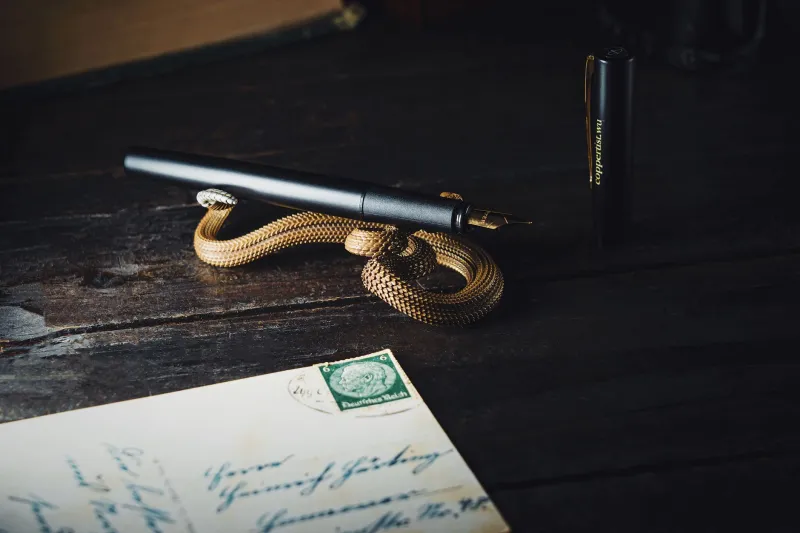
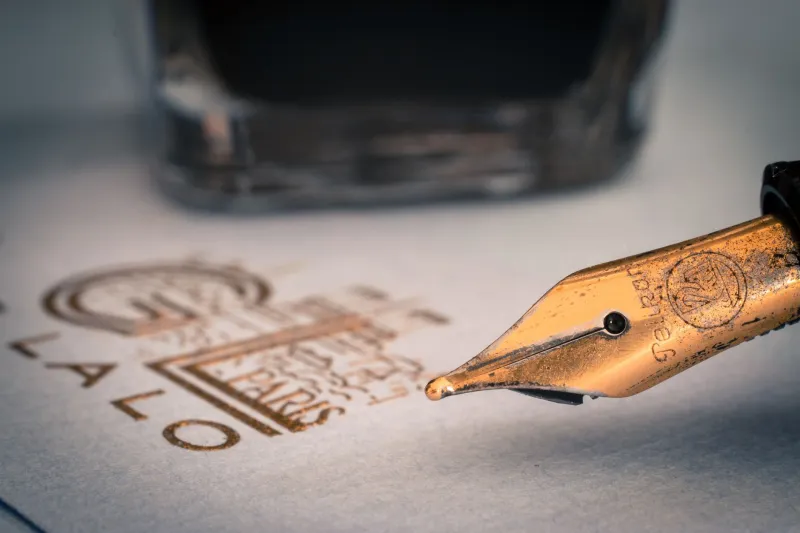
That sensibility has not disappeared. Walk into a well-appointed home in Paris, Vienna, or Milan, and you are likely to find a desk where a quality fountain pen rests in its holder, an inkwell sits within easy reach, and a letter opener occupies a small leather tray alongside a few precisely arranged items. Nothing excessive. Nothing careless. Each object chosen because it performs its function beautifully and because its presence elevates the experience of sitting down to write.
This philosophy aligns closely with what the Europeans call qualité sur quantité — quality over quantity. Rather than a drawer full of disposable ballpoints, one keeps a single pen that writes exceptionally well and feels deliberate in the hand. The difference in the writing experience is immediate and, once noticed, difficult to ignore.
The Letter Opener as a Symbol of Deliberate Living
Americans who have never owned a proper letter opener may wonder at its relevance in an age of digital communication. But this is precisely where the European perspective offers something instructive. The letter opener is not merely a tool for managing paper — it is a reminder that some things deserve to be opened with care.
When a handwritten card arrives, or a formal document requires attention, reaching for a beautifully crafted instrument rather than tearing carelessly at the envelope changes the nature of the moment. It slows the experience. It introduces a small ceremony into what might otherwise be a thoughtless gesture. And in that slowing, something is recovered: a sense that correspondence — even in its most modest forms — is worthy of respect.
European letter openers come in a range of materials and styles, from burnished brass handles with tapered steel blades to pieces carved from horn or bone, finished with the kind of attention to detail that makes them feel like heirlooms rather than accessories. Placed on a desk, they serve as a quiet invitation to engage with one's correspondence rather than dread it.
Curating a Desk Worth Returning To
The European approach to desk accessories is governed by the same principles that guide their approach to interior design more broadly: restraint, intention, and the elevation of the everyday through considered selection. A desk need not be elaborate to feel distinguished. It needs only to be honest — each object present because it earns its place.
Begin with the writing instrument. A quality fountain pen or a well-balanced rollerball in a material that ages gracefully — lacquered resin, brushed metal, or polished wood — will serve both functionally and aesthetically. Pair it with a simple pen holder or a small leather rest that keeps it accessible without crowding the surface.
Next, consider the letter opener. Even if physical mail is infrequent, its presence on the desk signals a certain orientation toward correspondence as something ceremonial. Look for pieces with clean lines and substantial weight — objects that feel purposeful rather than decorative.
A small tray or organizer, ideally in leather or lacquered wood, consolidates the essentials without creating visual noise. The European desk rarely accommodates clutter. What it does accommodate is a small collection of things chosen with care: a good pen, a sharp opener, perhaps a glass paperweight or a single framed photograph. Nothing more than is necessary. Nothing less than is beautiful.
Permission to Take Your Workspace Seriously
For many Americans, investing in desk accessories carries a faint guilt — a sense that beautiful objects at a workspace are somehow indulgent or impractical. The European tradition offers a gentle correction to this thinking. The objects that surround us during the hours we spend working and corresponding shape the quality of that experience in ways both subtle and cumulative.
A desk that feels considered invites a different kind of attention. It encourages one to write more carefully, to linger over a response rather than dash it off, to treat the act of putting words on paper — whether a note of thanks, a letter of introduction, or a simple grocery list — as something worth doing well.
This is not about expense. It is about intention. A single quality pen purchased thoughtfully will outlast a hundred disposable ones and will bring a quiet satisfaction each time it is uncapped. A letter opener that fits beautifully in the hand will be reached for gladly rather than ignored.
A Small Investment in Daily Dignity
The European philosophy of the considered desk is, at its core, a philosophy of daily dignity. It holds that the hours spent at one's writing surface are not merely productive hours to be endured — they are hours of life, deserving of the same attention and aesthetic care given to any other corner of a well-kept home.
At Lemes & Co., we believe that elegance is not reserved for grand occasions. It lives in the objects we reach for each morning, the rituals we maintain without thinking, and the small ceremonies we allow into our days. The letter opener returned to its tray. The pen replaced in its holder. The desk, at the end of the day, exactly as it should be.