The Unhurried Interior: How Europeans Redecorate Without Starting From Scratch
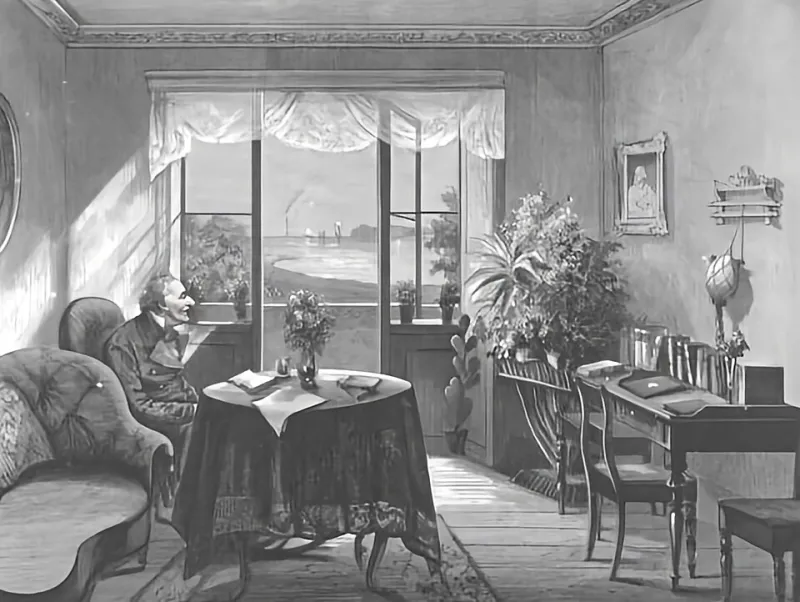
Photo: Unknown authorUnknown author, Public domain, via Wikimedia Commons
The American instinct, when a room begins to feel stale, is to start over. New sofa, new rug, new paint color, new everything—a clean slate that arrives, fully assembled, from a weekend of determined shopping. It is an approach that delivers immediate satisfaction but rarely produces rooms with genuine depth. Spaces assembled all at once tend to look precisely that way: coordinated, perhaps, but curiously flat, as though the life has been edited out along with the clutter.
The European approach to redecorating operates from an entirely different premise. Rather than treating a room as a problem to be solved, it treats it as a conversation to be continued. Furniture is not discarded when it feels dated; it is repositioned, reupholstered, or simply recontextualized alongside something new. A grandfather's writing desk sits beside a contemporary lamp. A flea-market find from Provence anchors a corner that once felt purposeless. The result is an interior that accumulates meaning the way a well-traveled life accumulates experience—gradually, and with increasing richness.
The Philosophy Behind the Evolving Interior
At the heart of the European redecorating sensibility is a resistance to disposability. This is partly cultural and partly economic—European homes, particularly in older cities where space is at a premium, have long demanded that objects earn their keep over the long term. But it is also aesthetic. There is a widely held belief, from the ateliers of Paris to the design studios of Copenhagen, that rooms assembled entirely from new pieces lack the visual tension that makes an interior genuinely interesting.
That tension—the productive friction between old and new, inherited and acquired, rough-hewn and refined—is precisely what gives a European interior its sense of having been lived in rather than staged. It signals that the people who inhabit the space have made deliberate choices over time, rather than outsourcing their taste to a single showroom visit.
For American homeowners, absorbing this philosophy requires a meaningful shift in perspective. It means resisting the impulse to refresh everything at once and learning instead to ask a more precise question: not "What does this room need?" but "What does this room already have that I am not yet seeing clearly?"
Audit Before You Acquire
The first step in the European approach to redecorating is also the most counterintuitive: do nothing for a while. Live with the room as it is. Notice which pieces you genuinely love and which ones you have simply stopped seeing. Identify the items that carry personal significance—the side table you found at an estate sale in Vermont, the lamp that belonged to your aunt—and consider whether they are being given adequate visual space to register.
From this audit, a clearer picture emerges. Most rooms contain two or three pieces with genuine character that are being undermined by a surrounding cast of filler furniture—items purchased to solve a practical problem without contributing anything to the room's atmosphere. These are the pieces worth replacing. The character pieces, by contrast, are worth building around.
This distinction—between what anchors a room and what merely occupies it—is the foundation upon which thoughtful redecorating rests.
The Strategic Introduction of New Pieces
Once the anchor pieces have been identified, the European method calls for introducing new elements with considerable restraint. Rather than replacing a sofa and a coffee table and a set of side chairs simultaneously, the approach favors a single meaningful addition at a time, followed by a period of observation before the next move is made.
This might mean sourcing a vintage mirror from an antiques dealer and living with it in several different positions before committing. It might mean reupholstering an existing armchair in a fabric that responds to a new rug, rather than replacing the chair entirely. It might mean simply moving a beloved painting from one wall to another, where it suddenly reads as the room's focal point rather than an afterthought.
Each of these interventions costs less—financially and emotionally—than a wholesale replacement, and each has the potential to transform the room's character far more dramatically than a new sofa ever could. This is the paradox at the center of the European decorating sensibility: less acquisition, more transformation.
Mixing Vintage and Contemporary with Confidence
One of the most practical skills in the European decorator's repertoire is the ability to integrate vintage or antique pieces into a contemporary context without the result feeling like a museum installation. The key lies in proportion and purpose.
A large antique armoire, for instance, can anchor a modern bedroom beautifully if it is the room's dominant vertical element and if the surrounding pieces are kept deliberately simple. A set of mid-century dining chairs pairs gracefully with a clean-lined contemporary table if the upholstery is updated in a fabric that feels current. The vintage piece does not need to be disguised—it needs to be given a clear role within the room's composition.
American shoppers have more access to quality vintage furniture than they often realize. Estate sales, regional auction houses, antiques markets in cities like Hudson, New York, or Round Top, Texas, and a growing number of curated online platforms offer pieces with genuine provenance at prices that compare favorably with new furniture of equivalent quality. The investment of time required to find these pieces is itself part of the European philosophy—the search is understood to be part of the process, not an inconvenience to be bypassed.
Identifying Investments That Transcend Trends
Not every piece merits the patience this approach demands, and part of developing a more considered decorating practice is learning to distinguish between objects that will reward long-term ownership and those that will simply age poorly. As a general principle, pieces with clean lines, quality construction, and materials that develop a patina over time—solid wood, leather, natural stone, hand-woven textiles—tend to transcend the decorating cycles that render trend-driven purchases obsolete within a few years.
The question to ask of any significant purchase is not "Is this fashionable?" but "Will I still want to look at this in fifteen years?" It is a more demanding standard, but it is also a more honest one. Furniture that passes this test tends to be furniture worth keeping, repositioning, and eventually passing on.
Permission to Slow Down
Perhaps the most valuable gift the European approach offers American decorators is permission—permission to live with imperfection, to resist the cultural pressure to have a finished, fully realized home at all times, and to trust that a room assembled slowly, with genuine discernment, will ultimately be more satisfying than one assembled quickly, with convenience.
The homes that feel most alive are rarely the ones that look most complete. They are the ones that tell a story—of travels taken, of objects loved, of taste refined over time. Building that kind of interior is not a weekend project. It is, rather pleasingly, a lifetime's work.